
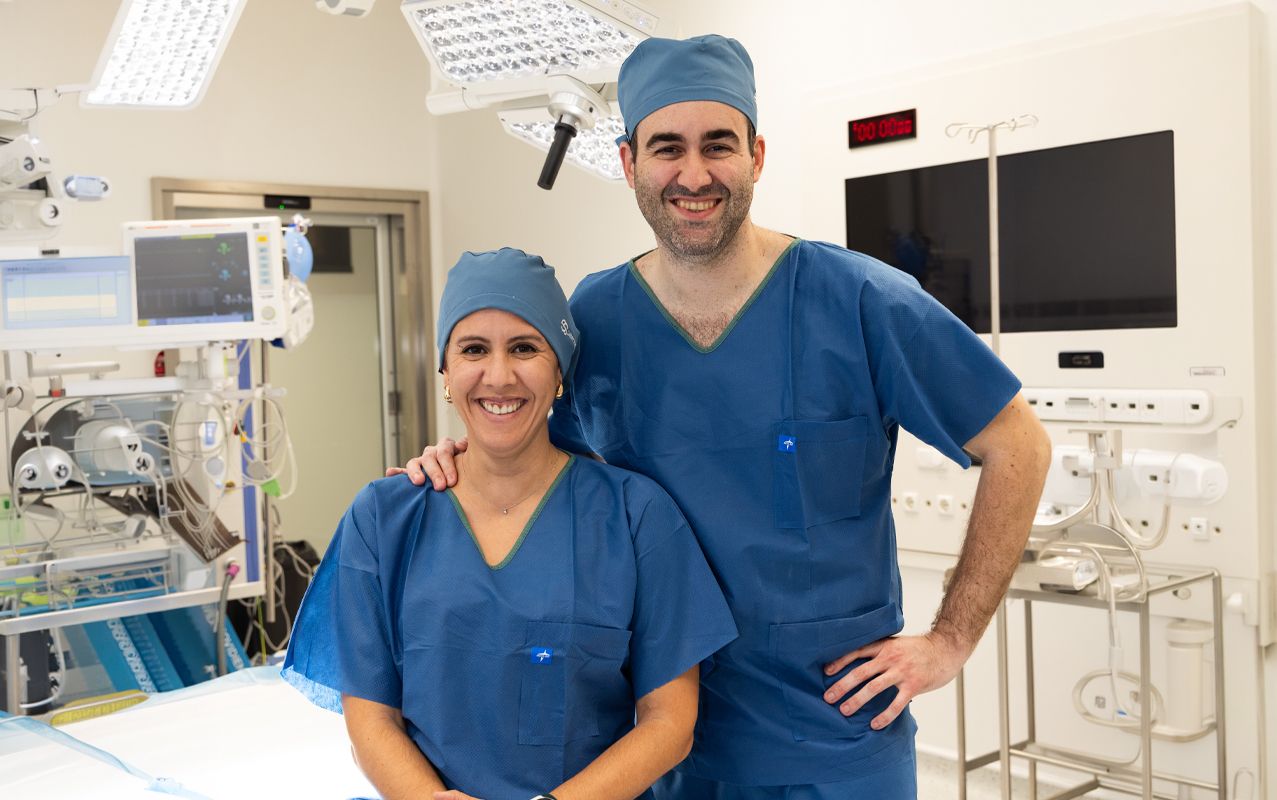
Hip Unit
The Hip Surgery Unit is integrated by a team of highly specialized professionals, and stands out in advanced fields such as arthroscopy, hip preservation surgery and prosthetic surgery. The professionals of the unit are committed to innovation and personalized attention, which defines the excellence of the Unit.
Staff at the Unit




Most common pathologies and interventions performed by the Hip Unit
Hip injuries
Hip Osteoarthritis
Hip fractures
Femur fractures
Trochanteritis
Spring-loaded hip
Pyramidal syndrome
Advanced hip treatments
List of less common or more complex CADERA problems to which the Unit devotes special attention in its practice.
Revision hip replacement surgery
Hip prosthesis revision surgery is performed when a previously implanted prosthesis fails due to wear, loosening, infection or dislocation. This procedure involves the removal of the damaged prosthesis and the placement of a new one, using advanced materials that seek to improve stability and durability. It is a complex surgery that requires precise planning and specialized techniques, since it is necessary to preserve and reconstruct the bone around the joint to ensure the correct fixation of the new prosthesis.
Periprosthetic hip fractures
Periprosthetic fractures are bone fractures that occur around a hip prosthesis. Their treatment can be complex, as the stability of the prosthesis and the patient’s bone quality must be considered. Treatment usually involves the use of specific plates and screws to stabilize the fractured bone, or, in some cases, replacement of the prosthesis if it is unstable.
Hip arthroscopy
Hip arthroscopy is a minimally invasive procedure that allows the diagnosis and treatment of various intra-articular pathologies, such as femoroacetabular impingement, labral lesions, synovitis or free bodies, among others. Through small incisions, a camera and specific instruments are introduced, allowing surgery without opening the joint. Arthroscopic techniques favor an early recovery with less risk of complications.
Hip osteotomy
Hip osteotomy is a surgical procedure that corrects deformities in the hip joint by altering the position of the pelvis or femur to improve joint alignment. This technique is commonly employed in patients with hip dysplasia or early osteoarthritis by redistributing joint loads to prevent further deterioration and relieve pain. Recovery involves gradual rehabilitation to strengthen the hip muscles and allow the bone to adapt to its new position, which can help preserve the joint and avoid a prosthesis in the future.
Proximal hamstring pathology
Proximal hamstring pathology refers to injuries to the insertion of these muscles at the hip, which may include chronic tendinopathies or ruptures. These injuries cause pain in the gluteal area and back of the thigh, affecting mobility and ability to sit or walk. Initial treatment includes physical therapy, shock wave therapy and rehabilitation to reduce inflammation and strengthen the musculature. In severe cases, surgery to repair the tendon or perform tendon reattachment may be necessary, followed by a progressive recovery program.
Further information
On this page of the American Academy of Orthopaedic Orthopaedic Surgery (AAOS) you will find relevant information on the most common pathologies treated in Orthopaedic Surgery*.

*Free access. Information in English. Dr. Samitier is an international member of the AAOS and a member of the AAOS Sports Medicine Committee since 2017.
Also be sure to visit ORTHOPEDIA, Orthopedic Surgery Education.
