Muscle-Tendon and Sports Injury Unit
The Muscle-Tendon and Sports Injuries Unit is made up of some of the most experienced specialists on the national scene.
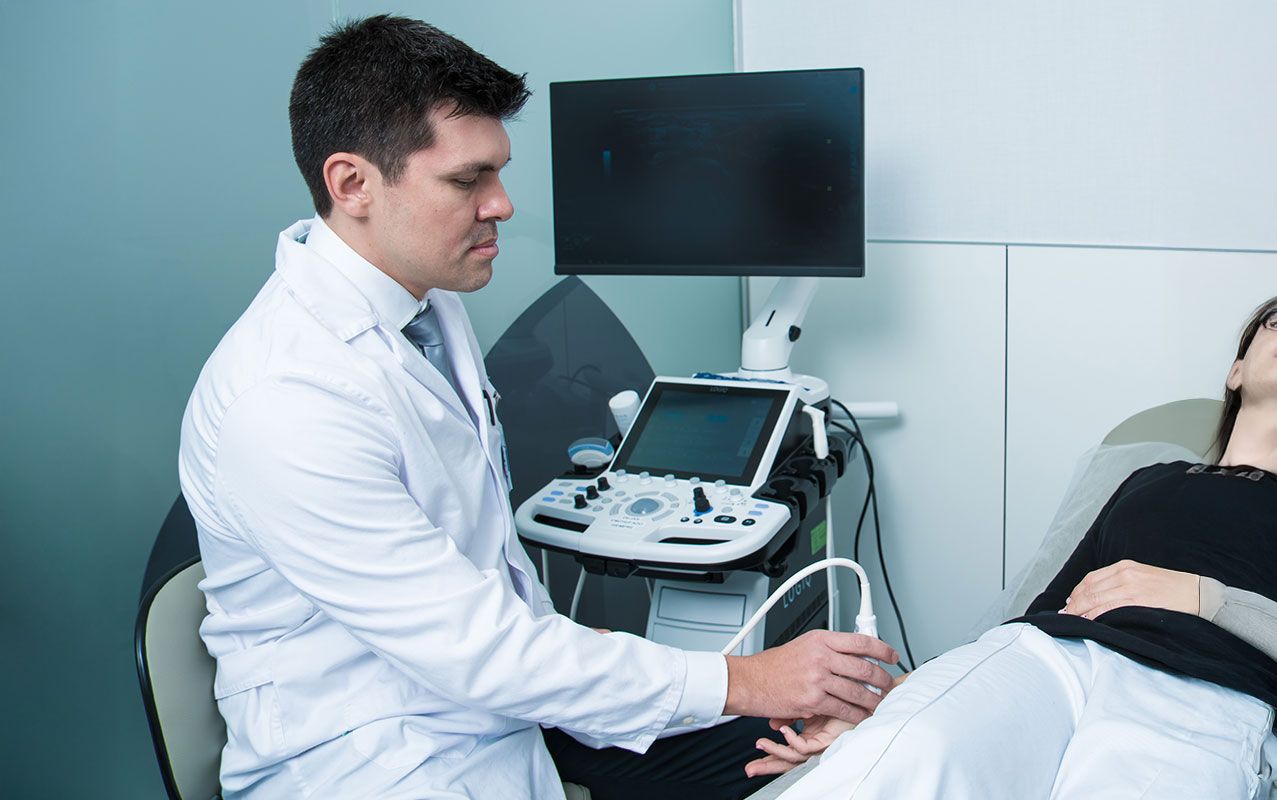
It is worth mentioning the high specialization in the use of ultrasound and echo-guided treatments. The team’s expertise in the management and follow-up of muscle-tendon injuries is particularly valuable for both recreational and professional athletes. The Unit complements and coordinates with surgical specialists so that when conservative treatment fails or is not indicated, the athlete can find a definitive solution to his or her problem in the same facilities.
Staff at the Unit
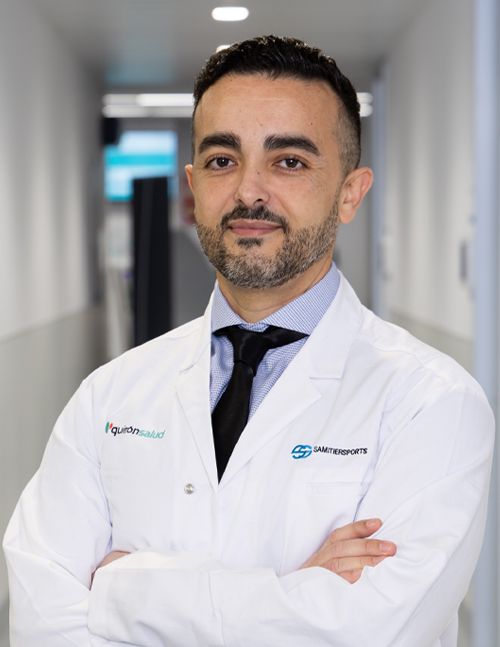
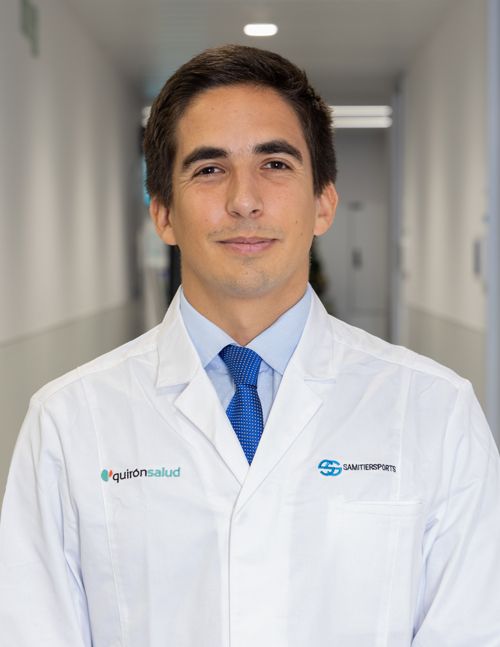
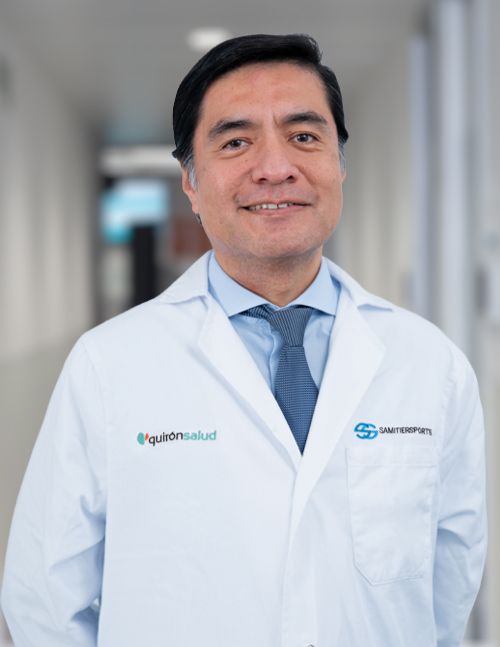
Most common pathologies and interventions carried out by the Muscle-Tendon and Sports Injuries Unit
Muscle and tendon injuries
Tendinopathies
Muscle ruptures
Tendon ruptures
Enthesopathies
Bursitis
Advanced muscle and tendon treatments
Most common MUSCLE AND TENDON pathologies and interventions carried out by members of the unit
Pectoralis major repair
Repair of the pectoralis major is essential in cases of complete or partial tears, commonly associated with eccentric movement with high loads. The surgical procedure aims to restore the anatomy and function of the muscle, achieving an adequate reinsertion at the level of the humerus by means of anchors and sutures. This repair allows the recovery of the strength and stability of the shoulder and improves the functional capacity of the patient, as well as the aesthetics of the pectoralis, favouring the return to physical activity with less risk of recurrence.
Repair of Achilles tendon ruptures
Repair of Achilles tendon ruptures is essential to restore function and prevent muscle atrophy in the calf. Current surgical techniques include both open and minimally invasive approaches, allowing precise reattachment of the tendon and reducing complications. This approach allows for a progressive recovery of ankle strength and stability, and is crucial for physically demanding patients or athletes seeking an early return to activity.
Anterior rectus thigh repair
Repair of an anterior rectus rupture, a rare but complex injury, is performed in cases of complete avulsion or when there is a significant rupture that affects the functionality of the thigh. The procedure involves reattachment of the tendon, using suturing and anchoring techniques, especially in high-grade complete avulsions. Surgical repair restores strength and stability to the quadriceps, which is crucial for athletic performance and activities that require active knee extension.
Proximal hamstring avulsion repair
Proximal hamstring avulsion usually occurs during activities that require rapid accelerations and high-energy eccentric movements and requires surgical repair to restore the tendon insertion into the pelvis. This procedure involves reinsertion using sutures or bone anchors, and is essential to avoid long-term functional deficit and weakness in hip extension and knee flexion. Surgery optimises strength recovery and reduces the risk of tendon retraction, as well as the occurrence of neurological symptoms associated with the development of fibrosis around the sciatic nerve.
Patellar tendon repair
Patellar tendon repair is performed in cases of complete rupture, which significantly compromises knee function. The surgical technique consists of reattaching the tendon at the level of the patella, usually using anchors or reinforced sutures. This intervention is crucial to restore the knee’s capacity for active extension, allowing patients to resume their daily and sporting activities. Postoperative rehabilitation is critical to the success of the treatment, promoting the restoration of strength and mobility.
Quadriceps tendon repair
Quadriceps tendon rupture, another very debilitating injury that affects active knee extension, requires surgical intervention to reattach the tendon to the top of the patella. This procedure is essential to restore quadriceps function, knee stability and the ability to perform weight-bearing and extension movements.
Further information
On this page of the American Academy of Orthopaedic Orthopaedic Surgery (AAOS) you will find relevant information on the most common pathologies treated in Orthopaedic Surgery*.

*Free access. Information in English. Dr. Samitier is an international member of the AAOS and a member of the AAOS Sports Medicine Committee since 2017.
Also be sure to visit ORTHOPEDIA, Orthopedic Surgery Education.
