
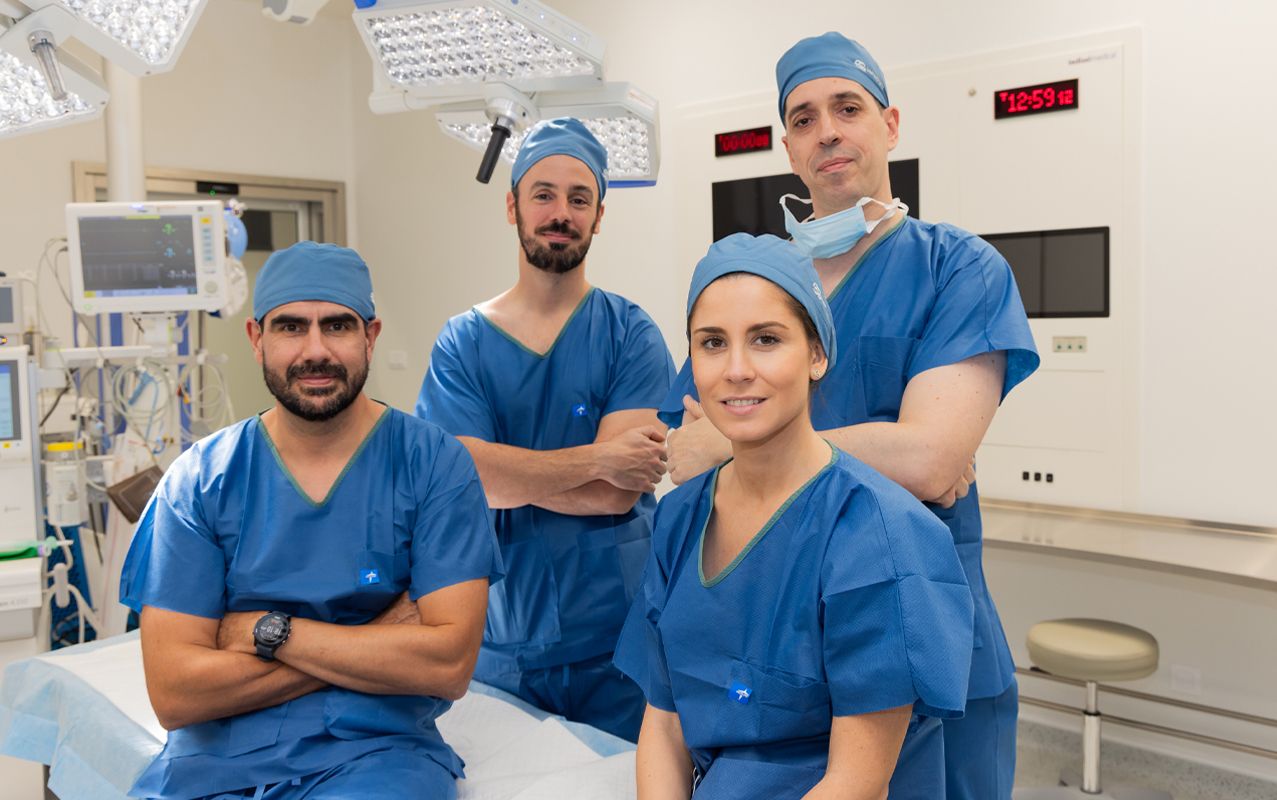
Knee Unit
The Knee Unit is a hallmark of our team. The years of experience of the Surgical and Medical Team allow us to deal with any problem of this complex joint with guarantees.
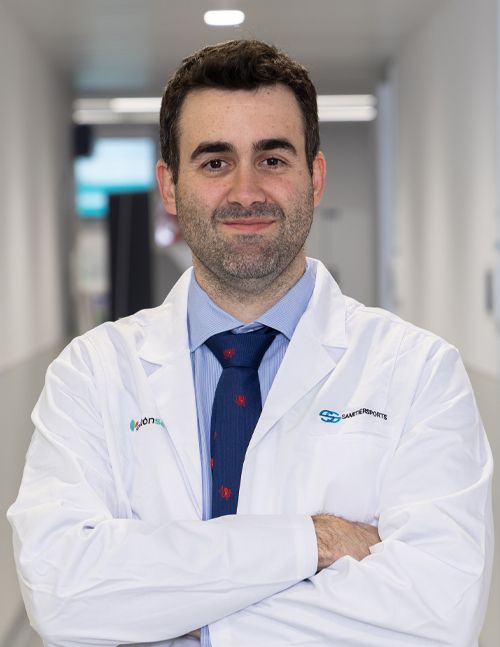
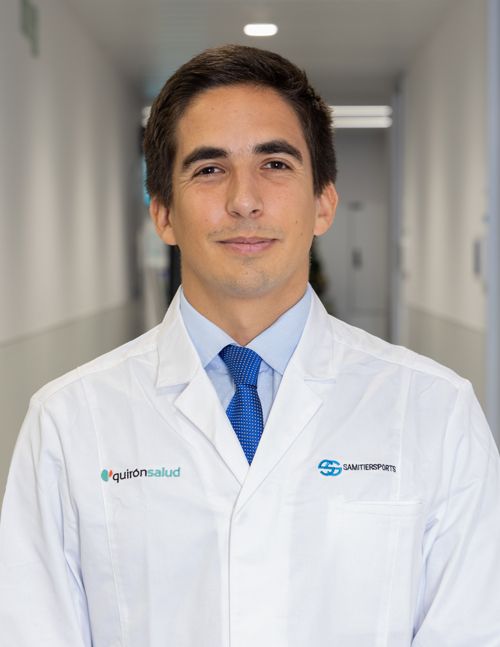
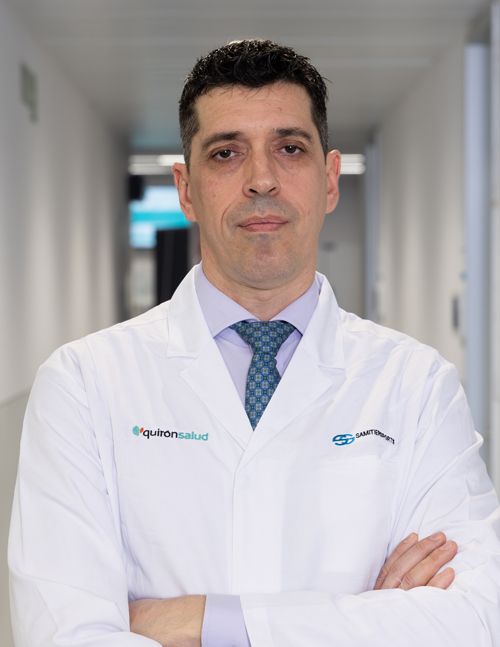
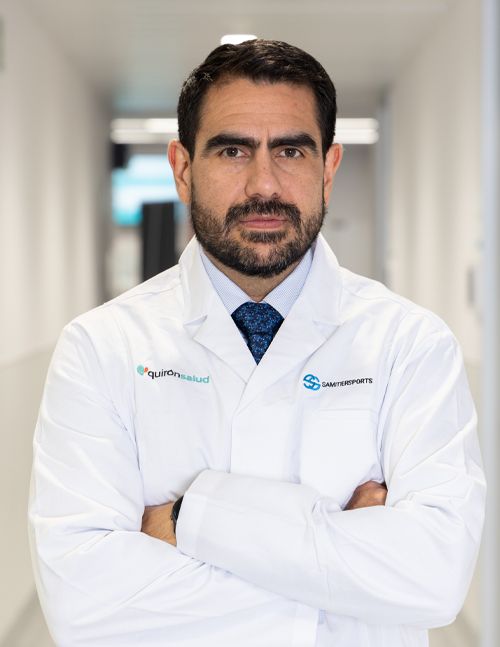
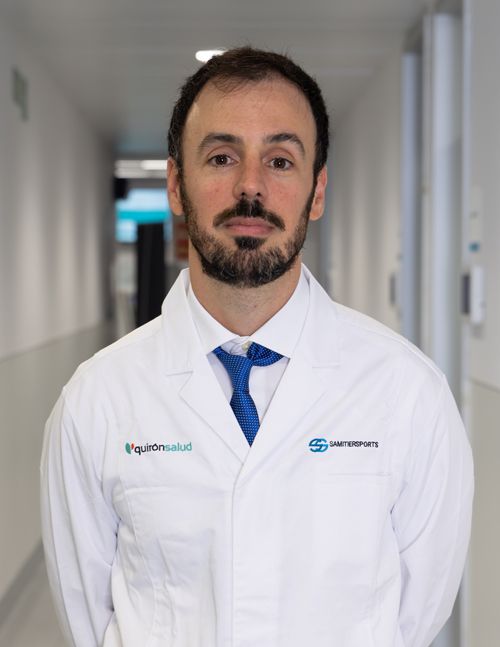
Staff at the Unit

Most common pathologies and interventions carried out by the Knee Unit
Knee injuries
Anterior and posterior cruciate ligament
Internal and external lateral ligament
Cartilage injuries
Baker's cyst
Patellar dislocation
Knee dislocation
Patellar chondropathy
Meniscus injury
Osteochondritis dissecans
Patellar tendonitis
Knee stiffness
Knee infection
Knee osteoarthritis
Advanced knee treatments
List of less common or more complex KNEE problems to which the Unit devotes special attention in its practice.
Anterior cruciate ligament replacements
The anterior cruciate ligament (ACL) is one of the most common knee ligament injuries. Unfortunately, in most cases it does not heal, leaving residual instability for sports practice, which makes ligament reconstruction surgery necessary to stabilise the knee. Anterior cruciate ligament surgery is technically demanding and meticulous execution is no less important because it is common; it is essential that the surgery is performed using current ‘anatomical’ techniques and that all associated injuries to the meniscus, cartilage and other ligaments are reviewed and repaired. The prognosis is excellent in experienced hands with unlimited recovery in 6 months in most cases, but can lead to complications and compromised function if reroturation occurs. In cases of ACL rerupture or the development of complications, experience and precise surgical technique are even more important and full recovery after reoperation is still possible.
Meniscal transplant
Meniscal allograft transplantation is indicated for patients under 55 years of age who have had a meniscus removed in its entirety and are beginning to experience pain and signs of wear and tear in the knee as a result. The meniscus comes from a donor and requires a certain amount of logistics and experience in the technique to offer good results, so there are few centres where this procedure is carried out with guarantees; a satisfactory meniscal transplant provides a high quality of life for patients, often young, for whom there would be no other therapeutic option than to continue with the pain or to fit a prosthesis. The scientific literature has long demonstrated the efficacy of meniscal transplants, even in the long term, with no possibility of rejection and no need for immunosuppressive medication of any kind by the patient, as is the case with organ transplants. Recovery to normal life is expected within 4 to 6 months, although as a general rule, competitive sport is not recommended after this procedure. This procedure is performed arthroscopically at our centre.
Treatment of large cartilage lesions
Cartilage lesions in the young patient are important and some of the most limiting. There are a multitude of treatment options that vary depending on the patient, the location of the lesion and its extent. At Quirónsalud Aribau Medical Centre we have experience in all of them and we are particularly specialised in our own recently published minimally invasive technique, which allows us to treat ulcers of any size in young, active patients using a matrix of the patient’s own healthy cartilage mixed with plasma rich in growth factors.
Knee dislocation and multi-ligament injuries
Knee dislocation and multi-ligament knee injuries are one of the most serious injuries to the knee joint and can sometimes jeopardise the viability of the limb; if not treated correctly, they leave significant after-effects and residual instability that can even make daily activities difficult. In most cases, reconstruction of the injured structures, anterior cruciate ligaments, posterior cruciate ligaments and collateral ligaments is necessary, sometimes in conjunction with treatment of the meniscus. A surgeon with experience in this type of injury is crucial to the success and recovery, which can take up to a year.
Osteochondral transplantation
Fresh osteochondral allograft transplantation consists of replacing a large and deep area of damaged bone and cartilage with a donor osteochondral fragment preserved at -4°C for a maximum period of 28 days. This technique is performed in people under 50-55 years of age; logistics and coordination with the Tissue Bank is even more important than in meniscal transplantation in order to be able to adjust to the window period in which the transplanted cartilage is viable, the recommended deadline being 21 days from the appearance of a donor. This is a highly technically precise procedure with good results in 85% of cases, to be performed in very symptomatic patients who would otherwise be condemned to prosthetic replacement.
Cruciate ligament in children
Cruciate ligament injuries in children and adolescents are relatively common although they have a number of peculiarities that must be taken into account when indicating surgical treatment; in very young children under 10 years of age it is generally preferable to wait for more advanced closure of the growth plate but from 12-13 years of age it is often preferable to reconstruct the ligament to avoid the appearance of associated injuries; cruciate ligament reconstruction can be safely performed in children and adolescents using modified techniques that do not affect the physis or growth plate, techniques that stabilise the knee and allow these young people to return to sport and other activities without limitations and without risk of meniscal and cartilage damage at an early age.
Recurrent dislocation of the patella
This is a relatively common problem in the young or very young population, generally < 20 years of age, and is more frequent in women due to morphological issues and the presence of greater joint laxity; sometimes episodes of dislocation occur up to several times a day, which is very limiting in their daily lives; Most of the time the problem can be solved by medial patello-femoral ligament (MPFL) reconstruction alone, although it is important for the surgeon to recognise the multiple factors that influence this problem and to identify those cases in which it may be necessary to associate other bony corrective gestures. With proper management, the problem disappears and recovery is complete for daily activities within 3-4 months.
Knee prosthesis
Knee replacements are advanced solutions designed to restore mobility and relieve pain in patients with severe damage to the knee joint, whether due to arthritis, fractures or degenerative injuries. This type of intervention replaces the affected joint structures with artificial components that mimic the knee’s natural function, allowing basic functions to be restored and improving quality of life. The implantation of a knee prosthesis dramatically increases the quality of life in selected patients and is a safe and effective procedure in the hands of our team of specialists.
Further information
On this page of the American Academy of Orthopaedic Orthopaedic Surgery (AAOS) you will find relevant information on the most common pathologies treated in Orthopaedic Surgery*.

*Free access. Information in English. Dr. Samitier is an international member of the AAOS and a member of the AAOS Sports Medicine Committee since 2017.
Also be sure to visit ORTHOPEDIA, Orthopedic Surgery Education.
