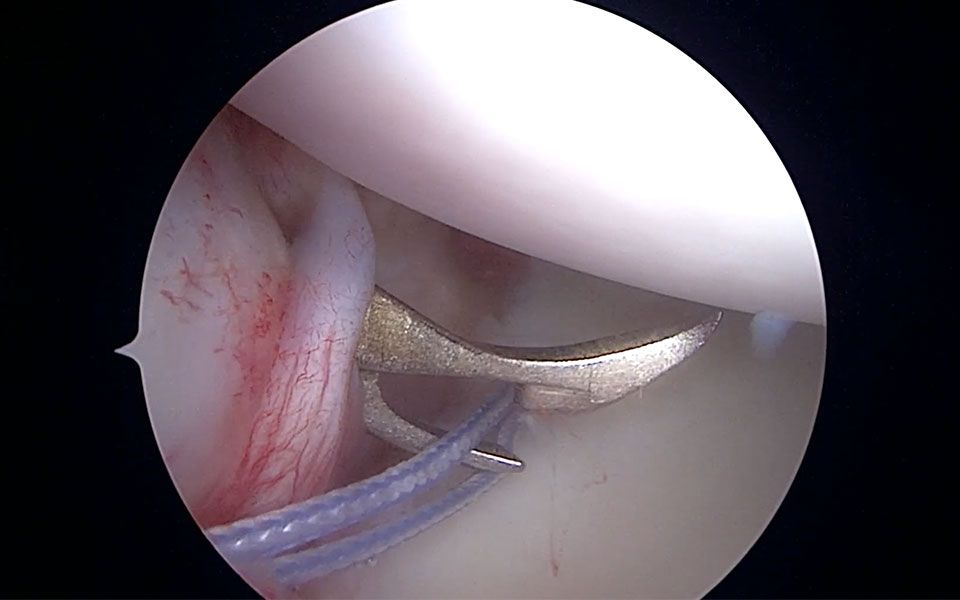
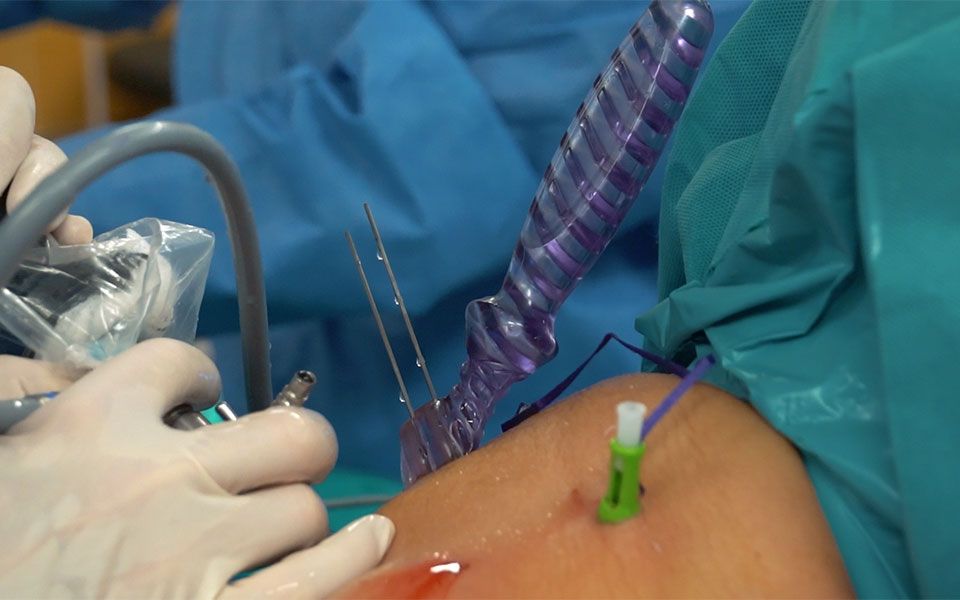
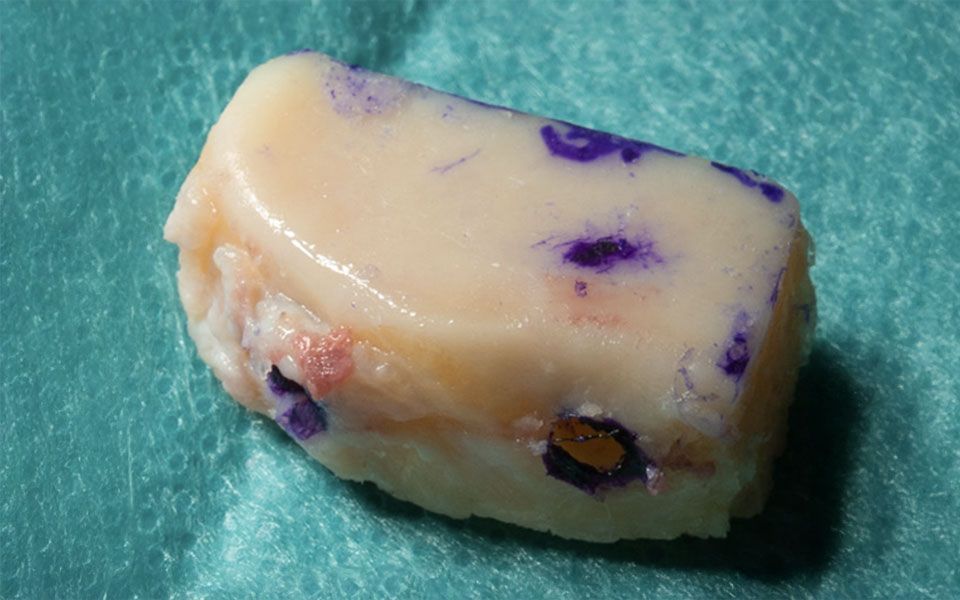
Primary surgery for recurrent shoulder dislocation has historically presented a significant number of recurrences, in some series more than 50% of patients. Nowadays it is necessary to complement conventional Bankart surgery with augmentation techniques that give greater support to the shoulder. In cases of glenoid and/or Hill Sachs humeral bone loss, it will be necessary for the surgeon to be familiar with bone augmentation techniques such as the open or arthroscopic Latarjet technique, as well as with the new solutions using bone caps.
Post-surgery reluxation
Latarjet technique
Bone Block techniques
Most common pathologies and interventions carried out by the Shoulder Unit
Shoulder injuries
Shoulder dislocation
Glenoid labrum injuries
Painful pitcher's shoulder
Frozen shoulder (adhesive capsulitis)
Rotator cuff tear
Subacromial syndrome
Calcifying tendinitis
Acromioclavicular dislocation
Fractures of the proximal humerus
Shoulder osteoarthritis
Advanced shoulder treatments
List of less common or more complex problems of the SHOULDER to which the Unit devotes special attention in its practice.
Shoulder instability and labral injuries
Recurrent shoulder dislocation in the young patient is usually resolved in the operating room, being one of the most difficult problems to correct. The labral repair technique is performed arthroscopically, but again, it is very important that your surgeon knows well the characteristics of your shoulder, the associated injuries and all the necessary technical gestures, such as remplissage and capsular plication, to prevent the shoulder from continuing to dislocate.
Recurrent shoulder dislocation with glenoid bone defect
Sometimes it is necessary to interpose a bone stop or to perform a Latarjet technique that increases the glenoid surface, especially in case of reinterventions or bone loss at that level; such anterior bone stop procedures are very appreciated by the patient who usually recovers very quickly; these patients often come after one or several unsuccessful interventions and a permanent insecurity with the shoulder. Bone bumper and Latarjet techniques are performed arthroscopically in our medical centers.
Rotator cuff repair
The injury of the supraspinatus, infraspinatus and subscapularis tendons, as a whole or in isolation, is what we call rotator cuff rupture; it is extremely frequent above the age of 50-60 years or in very active people, and presents with pain in the lateral aspect of the shoulder, loss of lifting strength and nocturnal pain; the most important thing when a rupture is confirmed in a patient < 50-60 years of age is not to delay surgical treatment too long, especially if there is constant, limiting pain and other treatments such as rehabilitation or infiltrations have failed. Again, in expert hands the chances of complete healing and disappearance of pain are very high. Patients over 70 years of age, smokers and those in whom the injury has many years of evolution the success rate decreases, but remains favorable. Be sure to choose a surgeon specialized in shoulder arthroscopy and follow his indications to the letter, it is very important to respect the initial postoperative period of the first 6 weeks, when the healing of the repaired tendon/s takes place. Complete recovery is slow and can take up to a year after surgery, but in many cases the patient is almost completely independent and pain-free after 4-6 months.
Complex and/or repairable rotator cuff tears
Rotator cuff tears sometimes progress to what we call irreparable tears due to the large retraction of the tendons and fatty infiltration of the muscle, making it unrecoverable. In these situations, to restore function and avoid pain, it is necessary to resort to more advanced techniques such as superior capsular reconstruction or tendon transfers. These techniques are mostly used in relatively young patients < 60 years of age in whom prosthesis placement would be too early.
Superior capsular reconstruction
Superior capsular reconstruction is reserved for irreparable ruptures of the supraspinatus tendon when the rest of the tendons are intact or at least repairable; although it is a relatively recent technique, the results are very encouraging in selected patients, and the technique can be performed completely arthroscopically.
Tendon transfers
In our medical centers we keep up to date with the most effective and at the same time less aggressive techniques to restore the function of young patients with irreparable rotator cuff injuries; the lower trapezius transfer is our choice in cases of infraspinatus tendon insufficiency to provide these patients with greater elevation and external rotation capacity. There are other useful transfers in case of insufficiency of other tendons such as the pectoralis major or latissimus dorsi transfer when the subscapularis tendon is not repairable. Fortunately, with proper experience, the vast majority of rotator cuff injuries are repairable, even in older people and long-standing ruptures.
Shoulder prosthesis
Shoulder prostheses are advanced solutions designed to restore mobility and relieve pain in patients with severe damage to the shoulder joint, whether due to arthritis, fractures or degenerative injuries. This type of intervention replaces the affected joint structures with artificial components that mimic the natural functioning of the shoulder, allowing the recovery of basic functions and improving the quality of life. There are several types of prostheses, such as anatomical and inverted, each one adapted to the patient’s specific needs and condition. The implantation of a shoulder prosthesis is a safe and effective procedure, performed by our team of specialists offers excellent results in the recovery of joint functionality.
Further information
On this page of the American Academy of Orthopaedic Orthopaedic Surgery (AAOS) you will find relevant information on the most common pathologies treated in Orthopaedic Surgery*.

*Free access. Information in English. Dr. Samitier is an international member of the AAOS and a member of the AAOS Sports Medicine Committee since 2017.
Also be sure to visit ORTHOPEDIA, Orthopedic Surgery Education.
